Lighting the Flame Within: The Art of Spiritual Integration After a High
Jun 10, 2025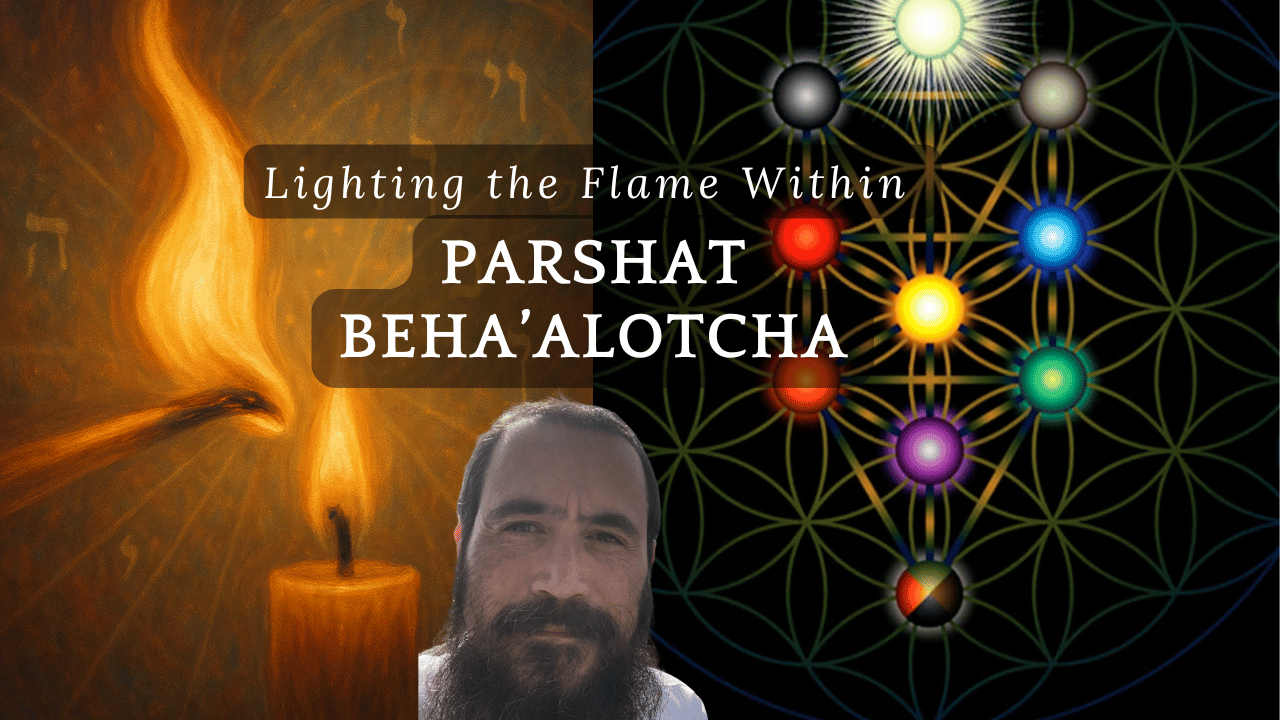
B"H
By Rabbi Amichai Cohen
Lighting the Flame Within: The Art of Spiritual Integration After a High
We’ve all been there. You attend an incredible retreat, experience a powerful holiday, or have a sudden breakthrough in meditation. For a moment, heaven and earth feel completely aligned. You feel inspired, clear-headed, and ready to take on the world.
But then, Monday morning hits. The traffic is bad, the email inbox is overflowing, or you fall right back into an argument you’ve had a hundred times before.
What happened to that version of you from just a few days ago? Did the inspiration wear off? Or is this where the real work actually begins?
In Jewish tradition, the seven days following the holiday of Shavuot (the celebration of receiving the Torah) are known as the Yemei Tashlumim—the days of completion or integration. It is a powerful transitional window that poses a massive question to us all: Do you want to go back to the old, or are you ready to embrace the new?
The blueprint for navigating this exact transition is hidden within a beautiful symbol from the ancient Tabernacle: the lighting of the Menorah.
The Secret of the Unattended Flame
In the Torah portion of Beha’alotkha, Aaron the High Priest is commanded to light the golden Menorah. The text uses a peculiar phrase for lighting the candles: Beha'alotkha, which literally means "when you cause the flames to ascend."
The classical commentator Rashi picks up on this nuance and explains a profound mechanic of spiritual growth. Aaron wasn't just supposed to touch a match to the wick and walk away. He was required to hold the fire to the wick until the flame rose up completely on its own.
This is the perfect metaphor for human transformation.
When we experience a moment of awakening or a "spiritual download," an external light is being held to our wick. We are being carried by a wave of inspiration. But inspiration is temporary. The goal of daily life is to let that light travel all the way down into the coarse, heavy, unrefined "wick" of our physical reality.
True evolution means holding the awareness steady until your own inner flame catches fire and burns independently. The inspiration must stop being something you visited and start becoming who you are.
Mind the Gap: The Space Between Stimulus and Response
So, how do we actually bring that light down into the "wick" of our daily habits? It starts with a shift in consciousness.
Most of the time, we live on autopilot. Something happens (a stimulus), and we instantly react based on years of conditioning. But if we can pause, we find a hidden doorway. Between the stimulus and the response lies the point of observation.
Growth doesn't mean you suddenly stop having default, ego-driven reactions. It means you become aware of them. When you can step back and observe your habitual mind without instantly acting on it, you are bringing light into a place that used to be completely dark. Even if you catch yourself after the default reaction, the fact that you observed it means you are no longer entirely trapped by it.
The "And I Love That" Technique
When we notice our flaws, our default reaction is almost always judgment. We tell ourselves: “I’m so bad at this,” “I’ll never change,” or “Why do I keep making the same mistake?”
But judgment is cold; it extinguishes the flame. The Menorah was lit specifically by Aaron, who represents the energy of Chesed—unconditional loving-kindness. To transform the coarsest parts of ourselves, we have to approach them with love, not criticism.
A powerful, practical tool to break the cycle of self-judgment is radical acceptance. Next time you catch yourself slipping into an old habit, failing a goal, or making a mistake, voice the truth and immediately anchor it in acceptance:
"I messed this up again... and I love that part of myself."
"I'm feeling incredibly reactive right now... and I love that part of myself."
By doing this, you instantly shift the internal energy from resistance to compassion. You are no longer fighting yourself; you are lighting the wick.
From Shadow to Light
This ancient kabbalistic approach mirrors the core principles of modern depth psychology. Carl Jung famously taught that the psychological journey of a human being is to bring the shadow—the hidden, unrefined, and unconscious parts of ourselves—into the light of conscious awareness. Jung warned that keeping these aspects buried in the dark is the root of human suffering and dysfunction.
In spiritual terms, living on autopilot and hiding our flaws from ourselves is a state of exile (Galut). True liberation (Geulah) happens when we stop pretending to be perfect and instead bring every messy, imperfect piece of our reality into the light.
Don't be discouraged when the initial high of an inspired moment fades. The fading of the external light is simply an invitation from the universe for you to finally strike your own match, tend to your inner wick, and let your flame rise on its own.