5787: The Year of Paz, Finding the Gold Within
Sep 17, 2026
By Rabbi Amichai
Watch the teaching
Listen to the teaching: 5787: The Year of Paz, Finding the Gold Within on Spotify (10 minutes).
I want to speak a little about this year, the energy of this year, and what we are being asked to bring into our lives.
We have entered 5787, תשפ״ז, Tav Shin Peh Zayin. The final two letters, peh and zayin, spell paz, פז, a Hebrew word for fine gold. This gives us a beautiful way to approach the year: to search for the gold that is already within us, and to learn how to bring it into expression.
There is another connection that makes this especially meaningful. The first day of Rosh Hashanah this year fell on Shabbat, the seventh day. The letter zayin has the numerical value of seven. So as we entered a year ending in seven, we entered through the seventh day. Calendar for Rosh Hashanah 5787.
What does that meeting invite us to understand? And how do we take it beyond an interesting connection between letters and numbers, into the way we actually live?
The teaching I want to explore is about integration. We have an inner life. We have things we know, things we feel, things we have been learning for years. This year, how do we allow that inner work to enter our speech, our relationships, and our presence?
The gold beneath the earth
When we look at ourselves, we often notice what needs fixing first. We see a reaction we wish we did not have, a fear that keeps returning, or a part of ourselves that we have not yet learned how to work with.
And sometimes we conclude that this is all there is.
But in the image of digging for gold, the surface is only the beginning. There is earth to move through. There is something valuable that has not yet been uncovered.
That is how I want us to look at our inner work. A difficult trait can become a place of inquiry. What is happening underneath it? What strength needs to be refined here?
A person who reacts very strongly may need to learn how to direct that strength. Someone who feels everything very deeply may need boundaries that allow their sensitivity to become a gift. We still have work to do. But we can do that work with the understanding that there is something precious within us.
The word paz gives us this image of preciousness. In Tehillim, the teachings of Hashem are described as more desirable than gold, even much fine gold. The verse directs our sense of value toward what nourishes the soul. Psalms 19:11.
So when I speak about a year of gold, I am asking: What do we consider valuable? How much attention do we give to discovering the wisdom, love, and capacity for good that Hashem has placed within us?
Peh: the mouth, the face, and the inner person
The letter peh, פ, has the numerical value of eighty. We are within the Hebrew decade of the 5780s, which began in the autumn of 2019. Peh is associated with the mouth, peh, and therefore with speech and communication. Peh: meaning and numerical value.
There are two other words I want to bring into this reflection: panim, face, and penimiyut, inwardness or the inner dimension. Peh means mouth; panim means face. As a teaching, we can contemplate these words together: the inner person, the face we turn toward another, and the mouth through which we communicate.
Our face can reveal so much. We can say that everything is fine, and someone who knows us looks at our face and asks, “What is really going on?” There is an inner experience seeking expression.
And then there is our speech. What is coming through our words? Are we speaking from a place of presence? Are we listening to the person in front of us, or preparing our response while they are still speaking?
During the pandemic, so much of our experience involved covered faces and changed ways of communicating. Looking back, I find an invitation there to examine the relationship between our inner world and what we express. That is a reflection on what we can learn from the experience.
Now we have more ways to communicate than ever before. Social media and AI can help us teach, connect, and share something worthwhile. They also make it very easy to keep producing without pausing to ask what we want to say.
The work of peh is to bring awareness to that moment. Before something leaves my mouth, or before I post it, have I connected with its meaning? Is there something of my real attention in it?
Zayin: bringing the seven qualities into life
The zayin, ז, brings us to seven.
Seven has a recurring place in Torah. The week reaches Shabbat on the seventh day. The land has its seventh-year rest in Shemitah. In each, our work meets a sacred rhythm of rest. Genesis 2:1-3; Leviticus 25:1-4.
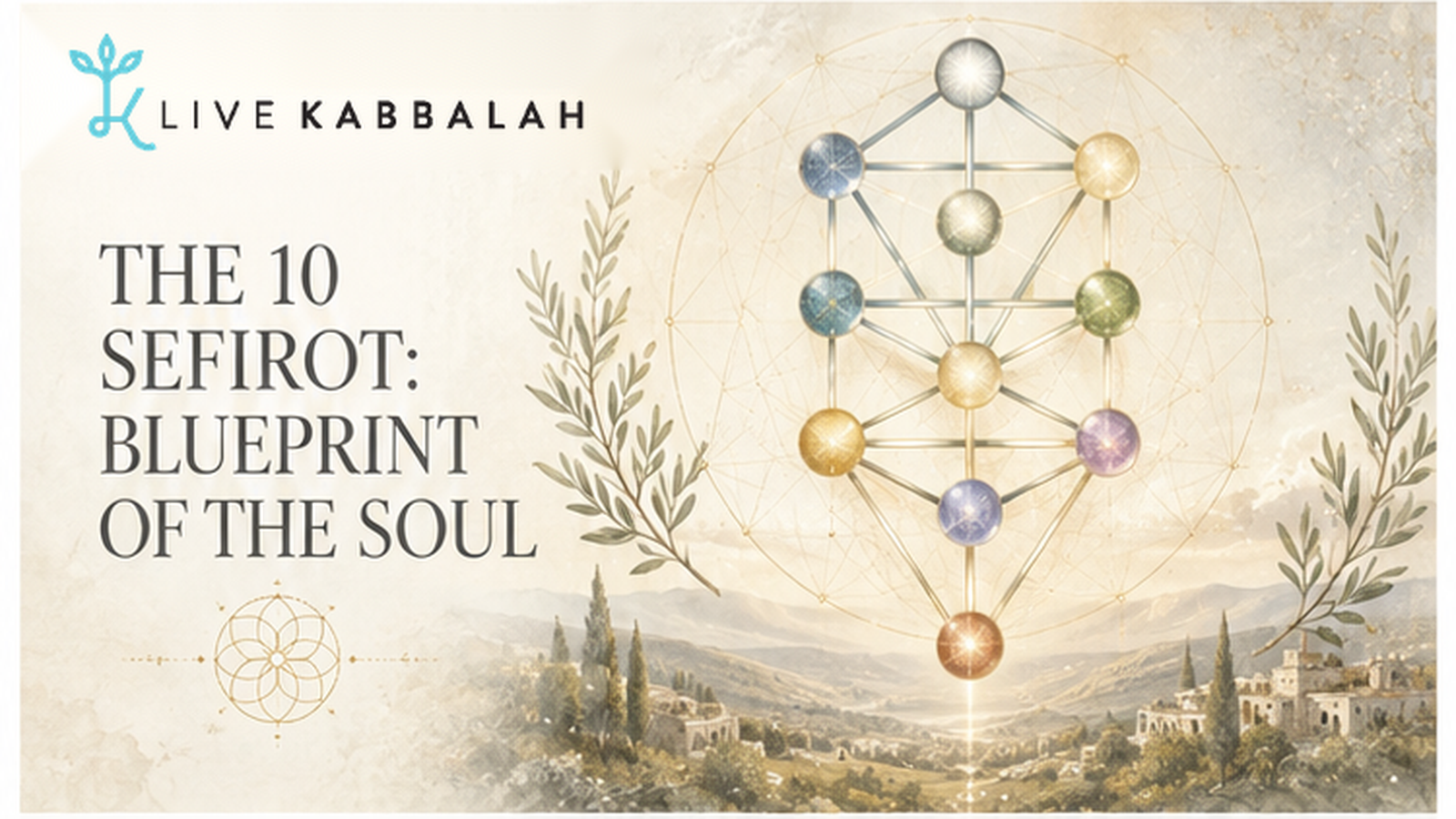
In Kabbalah, we also speak about the seven lower sefirot, the Divine qualities through which we explore our emotional and relational lives. They culminate in Malchut. The connection between Shabbat and these seven qualities also appears in the explanation of the seven aliyot on Shabbat. The seven sefirot and Shabbat.
We can begin to recognize these qualities in ordinary experiences:
- Chesed, loving-kindness: the movement to give, include, and open our hearts.
- Gevurah, strength and restraint: the ability to set a boundary and direct our energy wisely.
- Tiferet, harmony and compassion: the capacity to bring love and discernment into a balanced response.
- Netzach, perseverance: the willingness to stay with something worthwhile when the initial excitement has passed.
- Hod, humility and acknowledgment: the ability to listen, appreciate, and admit that we have something to learn.
- Yesod, connection: the capacity to build trust and bring what we carry into genuine relationship.
- Malchut, kingship: the expression of these qualities in the way we speak, act, and take responsibility.
Think about a conversation with someone you love. There may be care, but also a boundary that needs to be expressed. There may be a need to persevere through discomfort, and a need to listen and acknowledge something you missed. These qualities have to work together.
Malchut asks what finally comes into the room. What does the other person actually receive from us?
This is where inner growth becomes tangible. We may understand a teaching very well, but can we bring it into the moment when we feel challenged? Can our understanding enter our tone of voice, our patience, and the choice we make next?
Rosh Hashanah on Shabbat: beginning from presence
This brings us back to the way the year began.
Rosh Hashanah turns our attention toward the kingship of Hashem. We are considering the direction of our lives and the place we make for G-d within them. Shabbat brings us into the seventh day, a time that the Torah describes as blessed and sanctified. Genesis 2:3.
There is a deep connection here with Malchut. In the Kabbalistic understanding of Shabbat, Malchut rises and receives. The seventh becomes a place where the work of the week can be gathered into a higher awareness. Shabbat and Malchut.
In teaching about Shemitah, I have spoken about these two movements in our lives: doing our work, our hishtadlut, and then learning to let go. We make our effort, and we remember that Hashem is the source of the blessing. Shabbat gives us a weekly place to practice that trust.
So consider what it means to begin the year there. Before we rush into everything we want to accomplish, we are given Shabbat. We sit at the table. We pray. We allow ourselves to be present with the people who are there. We remember Who gives life to all of it.
That is the integration I see in peh and zayin this year. The inner life we have been cultivating needs a place to dwell. Our speech can carry it. Our relationships can carry it. Even the way we rest can express our trust in Hashem.
A crown and a responsibility
There is also a connection between paz and the crown. Midrash Tanchuma speaks of the crown of the Holy One, blessed be He, using the image of fine gold. The language of a crown points us toward something higher than our ordinary perspective. Midrash Tanchuma, Vaera 8:1.
In this teaching, I want to bring that image into our own work: allowing a deeper awareness of Hashem to guide the way we inhabit our lives.
We can spend a great deal of time discussing the qualities we want in our leaders. Malchut also brings that inquiry home. How do I take responsibility for what is entrusted to me? How do I speak to the people who depend on me? Am I bringing steadiness to the places where I have influence?
There is a dignity in that. We each have a place where our presence matters.
Let us go gold digging
A practical place to begin is with one recurring moment in your day.
Perhaps it is the conversation in which you tend to become impatient. Perhaps it is the moment you reach for your phone because being still feels uncomfortable. Or perhaps it is an act of kindness that you keep intending to do.
Pause there. Ask what is happening within you, and which quality needs attention. Then choose one action that gives that awareness expression. Listen a little longer. Set the boundary with care. Make the call you have been putting off.
This is how we begin to uncover the gold and bring it into our lives.
May 5787 be a year of paz, a year in which we discover more of what Hashem has placed within us. May our inner work enter our hearts, our words, and our actions. And may we have chalomot paz, golden dreams, with the presence and courage to give those dreams a place in the world.
Where in your life is there gold waiting to be uncovered?
Rabbi Amichai