BLOG

The Meaning of Dreams in Judaism

dreams talmud Feb 13, 2019

DREAMS AND JUDAISM

“A dream that is not interpreted is like a letter that is unread” -Talmud Berachot, 55a

What is the Jewish view of dreams? Dreams have always agitated and fascinated people. Indeed, the study of dreams goes back to ancient times. The question that has always existed is whether dreams have any significance?

1. Psychology

According to Sigmund Freud in his book The Interpretation of Dream, he claims that all details of a dream even the most ridiculous of them have significance. In his view, dreams represent the subconscious, which the person usually suppresses due to social prohibitions. During waking hours, logical tendencies predominate, not allowing instinctive desires to be .expressed and satisfied. According to Freud, these desires are primarily sexual

Though Freud’s theories have been rejected, psychiatrists and psychoanalysts do not contradict the fact that dreams are important and have significance. According to psychoanalysts such as Adler and Jung dreams are important and express other contents, such as aggressive tendencies or various personal desires.

Jung goes deeper into the significance of dreams refers to the Collective Unconscious, a deeper level than the Personal Unconscious. Jung meant by this, an experience that is inherently human. The symbolism that occurs in the psyche of individuals represents patterns that pertain to mankind as a whole.

A dream that is not understood remains a mere occurrence; understood, it becomes a“ living experience.” ~ Carl Jung

Jung believes that the symbols chosen by the dream are highly significant to the dreamer. Jung, along with Freud, believed that much of the content of the psyche is repressed and suppressed material. He sees the psyche as autonomous, having its own purpose and function and teaches us that we must look to our own inner world—perhaps to that Divine essence that is within us to guide us and to help us find meaning in our lives. Jung saw dreams as a true, objective statement of what is taking place in the psyche—what is necessary for the individual to know.

However, most Psychologists say that dreams do not have any significance. The main purpose of dreams is in order to forget some learned material, thereby producing “cleanliness of the head” and to liberate brain energy to gather other and varied material.

According to all the opinions above, they do not suggest that dreams need to be interpreted. They are rather just reflective of ones hidden desires or the activity of ones memory, which appears in the form of a dream.

2. Judaism

In Judaism, however, there is considerable amount of literature on dreams, which seem to reflect a totally different view. In Jewish thought dreams not only have significance but they can be even out-of-body experiences receiving important messages to the person.

The book of Bereishet- Genesis is scattered with dreams of the Patriarchs and others. The first dream
is (28:12), Jacob dreamt of a ladder standing on the ground with its head in the heaven and angels ascending and descending. This was a message to Jacob that there would be new angels accompanying him during his journey to Charan, replacing the angels who accompanied him in Israel (Rashi). Similarly, the dream of Joseph and the eleven stars (37:5) were a message that Joseph would in the future reign over his brothers in Egypt.

3. Talmud, Berachot, 57b

“Sleep is one-sixtieth of death” and Dreams are one-sixtieth of prophecy”

4. Talmud Berachos 55b- “Dreams follow the mouth”

The Talmud in a series of interesting stories states that the realization of all dreams follows the mouth, i.e. the import of a dream depends upon the interpretation given to it.

R’ Bana’ah says that there were twenty-four interpreter of dreams residing in Jerusalem. Now, he says, once I dreamt a dream and I went to each of them to ask for its interpretation. And that which this one interpreted to me was not the same as that which the other one interpreted to me; rather, I received twenty-four interpretations for the same dream. Yet, all of .these interpretations were realized for me, as indeed, each predicted event in fact materialized

According to this statement of the Talmud there is no such thing as a negative or positive dream. If a dream is interpreted positively it becomes a positive dream and if interpreted negatively it becomes a negative dream. Theoretically, a dream can be negative and positive at the same time, depending on its interpretation.

5. Annulling a negative dream

The talmudic statement that a dream depends on how it is interpreted, puzzling to the more philosophically minded, is discussed in the Responsa of Solomon Ibn Adret (The Rashba). Based on a talmudic passage, a special ceremony developed of interpreting for good a bad dream. The procedure was for the man who had the dream to say to three other persons: “I have had a dream and do not know what to make of it”; and they would reply: “The dream is a good one and is for your good”.

Many people, disturbed by a bad dream, would fast in order to ward off the possible evil effects. The rabbis allowed such a fast to be undertaken even on the Sabbath in order to release the man from his anxiety but they required him to undertake another fast for having fasted on the Sabbath.

6. Not to be interpreted literally
However, this view is contradicted by the bulk of Talmudic literature related to dreams. The Talmud (Berachos 55b) states, Rav Chisda said, ‘a positive dream’ is not destined to be fulfilled in its entirety nor is a ‘negative dream’. This is derived from the fact that Joseph saw in his dream, in addition to the eleven stars, the sun and the moon, reflecting his two parents, Jacob and Rachel, who would also become subservient to him. This is despite the fact that Rachel, his mother, passed away before the dream was realized years later in Egypt.

7. The interpretation feels right

The Midrash Rabba (69:6) states Rabbi Joshua of Siknin said in R. Levi’s name: There were indeed interpreters of the dream, but their interpretations were unacceptable to Pharaoh. He explains that the necromancers interpreted the dream that seven good cows mean that Pharaoh will beget seven daughters; the seven ill- favored cows, that you will bury seven daughters. The seven full ears of corn, that you will conquer seven provinces; the seven thin ears, that seven provinces will revolt against you.

Joseph’s interpretation:

According to this analysis of the story of Pharaoh’s dream, it is evident that the reason that Pharaoh did not accept the interpretation of the necromancers was not because he knew that whatever interpretation was given would follow the mouth of the interpreter and therefore for whatever reason did not accept their interpretation but rather because there was a single absolute interpretation which only Joseph offered and therefore satisfied Pharaoh.

This enforces the above-mentioned contradiction to the statement of R’ Bana’ah that realization of dreams follows the mouth, implying the possibility of more than one interpretation to a dream and the absence of negative or positive dreams.

Watch for part 2 of DREAMS AND JUDAISM and join our Online School for hundreds of classes on all topics on Jewish Spirituality 
https://www.livekabbalah.com 

Check out some of our best-selling courses 

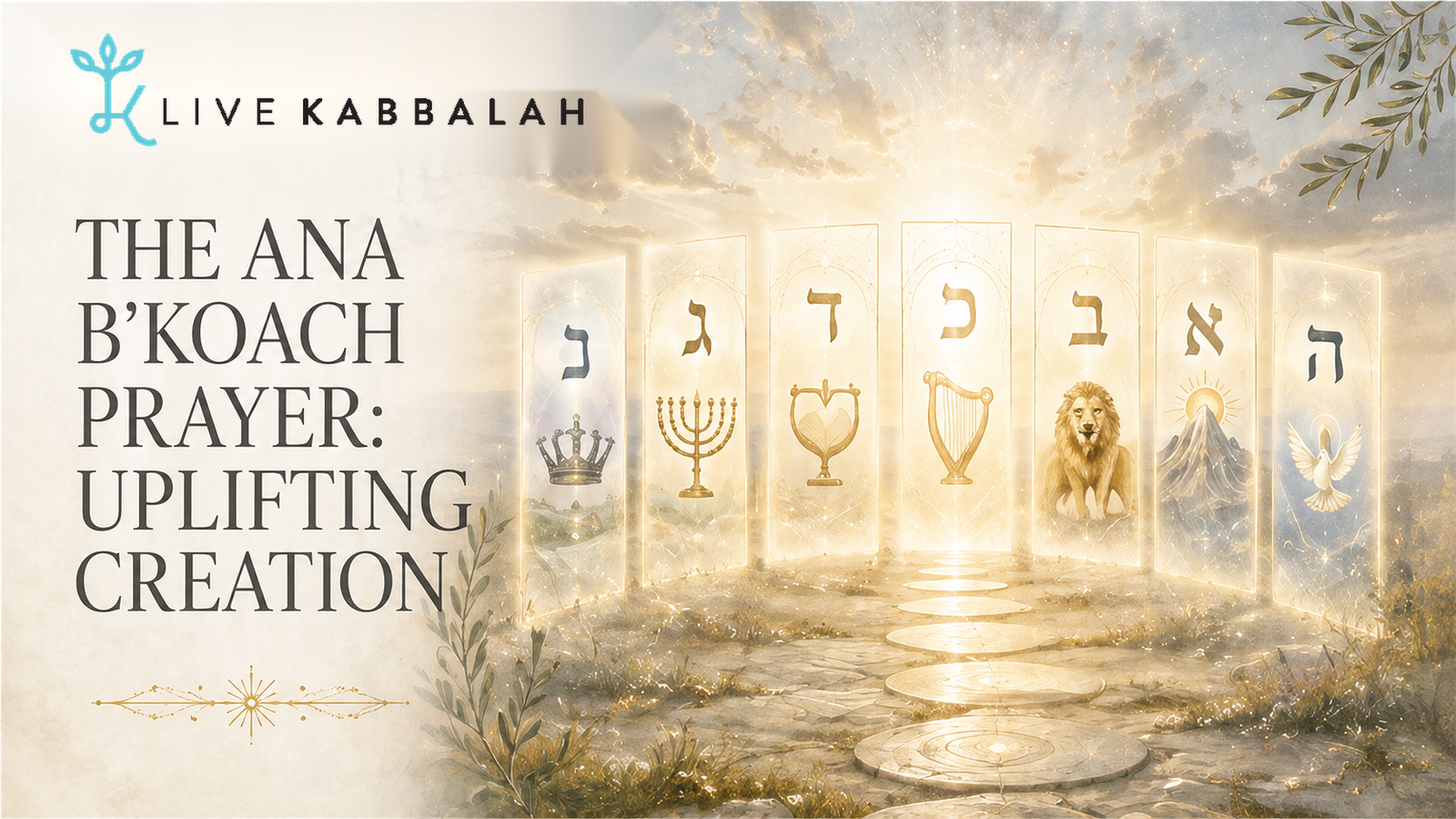
7 Days, 7 Prayers: The Ana B'Koach Journey

The Ana B'Koach is one of the most powerful prayers in the Kabbalistic tradition. Seven lines, 42 letters, a direct line into the energy that built creation. This package walks you through a verse a day, with a class that opens up the meaning and a meditation that lets you actually feel it. Each day carries its own sefirah, its own frequency, its own invitation. By the end of the week, you will not just have learned a prayer. You will have a daily rhythm that pulls you back into alignment whenever you need it. What You Will Explore Day 1: Chesed. The energy of giving and expansion. The Sunday opening that sets the week's tone. Day 2: Gevurah. Sacred discipline and boundaries. How to say no in service of a deeper yes. Day 3: Tiferet. Beauty, balance, the heart line. Reconnecting to truth in the middle of the week. Day 4: Netzach. Endurance and victory. The energy that keeps you going when the path narrows. Day 5: Hod. Gratitude and humility. Receiving what you have actually been given. Day 6: Yesod. Foundation and intimacy. Erev Shabbat alignment, the sealing of the week. Day 7: Malchut. Sovereignty and presence. Showing up as who you really are. Healing Sound Frequencies. Each meditation is professionally mixed with sound healing, making the whole experience as much somatic as it is intellectual. What You Will Receive HD professionally recorded classes for an immersive learning experience. Comprehensive PDF notes, worksheets, and exercises to deepen your study. Lifetime access. Revisit the material anytime, on any device. Bonus materials and recommended reading to enrich the journey. Personal application tools and guided reflections to bring the teaching into daily life. What Others Are Saying "I started this on a Sunday in a hard week. By Friday I was a different person. The combination of teaching and meditation is the real thing." — Eliana Silverstein, Designer, Brooklyn New York "I have been saying Ana B'Koach for years and never understood it. Now I cannot say it without tears. That is the whole journey right there." — Yossi Bernstein, Educator, Petach Tikva "The sound healing meditations are gorgeous. I keep them on repeat in the car." — Chana Weiss, Photographer, Cape Town Seven days, one prayer, a complete recalibration of your week. It only takes one cycle to feel the difference. Enroll today for $72 USD.

$72.00 USD

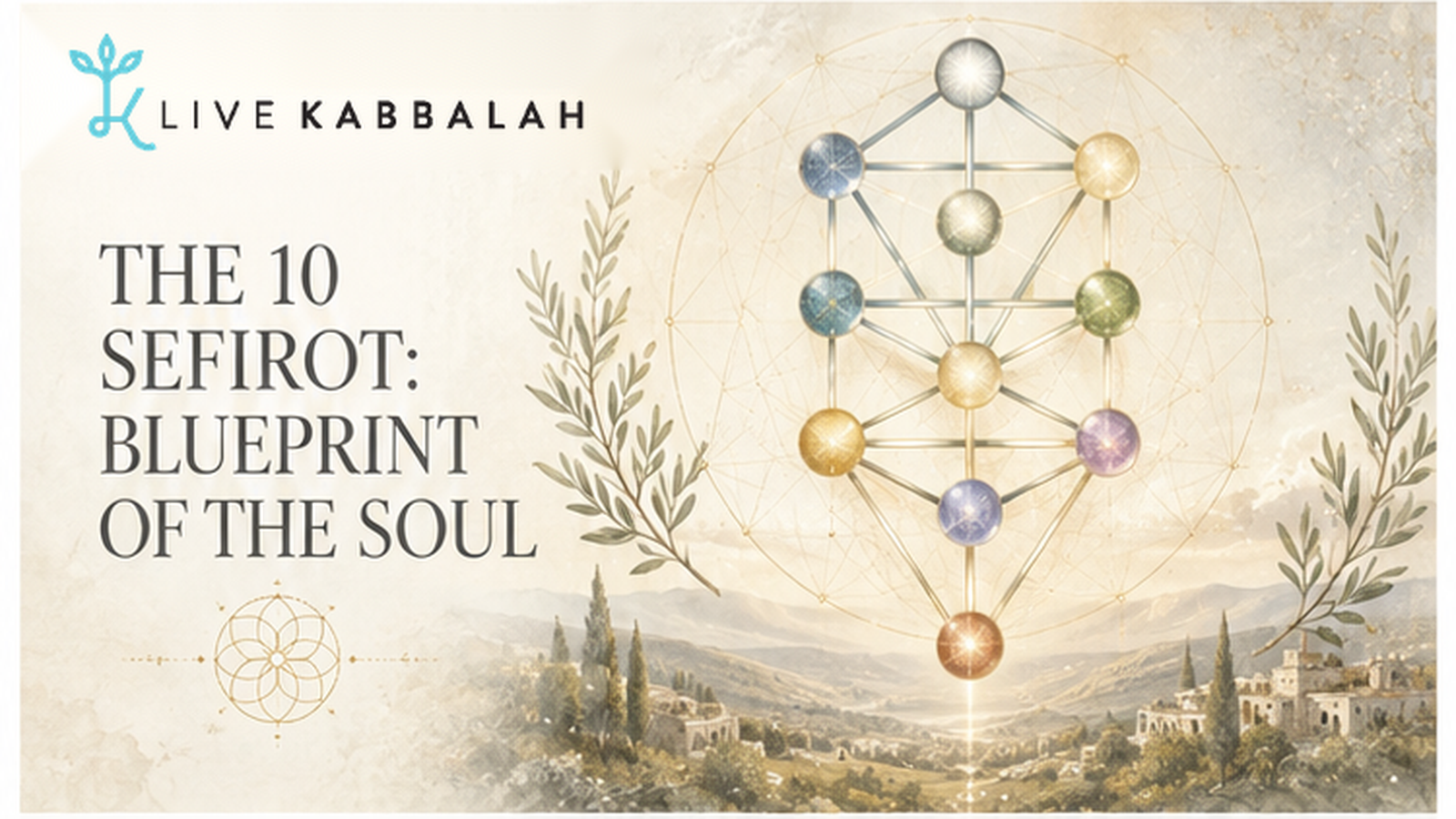
The 10 Sefirot: Blueprint of the Soul

The 10 Sefirot are Kabbalah's core map of the universe — and of you. This 12-part course takes you on a deep journey through the Tree of Life, revealing the divine blueprint that shapes your personality, relationships, purpose, and spiritual path. What You Will Explore The Tree of Life Overview. Understand the full structure of the 10 Sefirot and how they interact as a living system of divine energy. The Three Pillars. Explore the Pillar of Mercy, the Pillar of Severity, and the Pillar of Balance — and how they mirror forces within your own psyche. Keter: The Crown. Touch the highest point of divine will and learn how intention shapes everything below it. Chokhmah and Binah. Discover the interplay of wisdom and understanding — the father and mother of all creation. Chesed and Gevurah. Balance lovingkindness with discipline, and learn when to give and when to set boundaries. Tiferet: The Heart Center. Find harmony and compassion at the center of the Tree — the Sefirah of truth and beauty. Netzach and Hod. Explore victory and humility, and how ambition and surrender work together on the spiritual path. Yesod: The Foundation. Understand the role of connection, intimacy, and spiritual bonding in building a meaningful life. Malkhut: The Kingdom. Ground your spiritual insights into everyday reality and sacred action. The Sefirot in Relationships. Learn how the Sefirot reveal patterns in your closest relationships and how to bring them into alignment. The Sefirot in Decision Making. Use the Tree of Life as a practical tool for navigating life's most important choices. Tools and Meditations. Practice guided visualizations, journaling exercises, and meditations for each Sefirah. What You Will Receive 12 in-depth video lessons with Rabbi Amichai Cohen guiding you through each Sefirah and its practical applications. A beautifully illustrated Tree of Life reference guide you can use for study and meditation. Guided meditations for each Sefirah to help you embody the energy and integrate the teachings. Journaling prompts and self-reflection exercises for every module. Lifetime access to all course materials, so you can revisit the teachings whenever you need guidance. What Others Are Saying "This course gave me a language for understanding myself that nothing else ever has. The Sefirot are now part of how I see the world." — Aaron Stein, Psychologist, New York "Rabbi Amichai brings such warmth and depth to each Sefirah. I felt like I was being guided through a map of my own soul." — Liat Avraham, Yoga Teacher, Tel Aviv "I've studied Kabbalah for years, but this course brought everything together in a way I hadn't experienced before. Truly transformative." — Rebecca Mizrachi, Author, Los Angeles The Tree of Life has been guiding seekers for thousands of years. Now it is your turn. Enroll today for $229 USD.

$229.00 USD

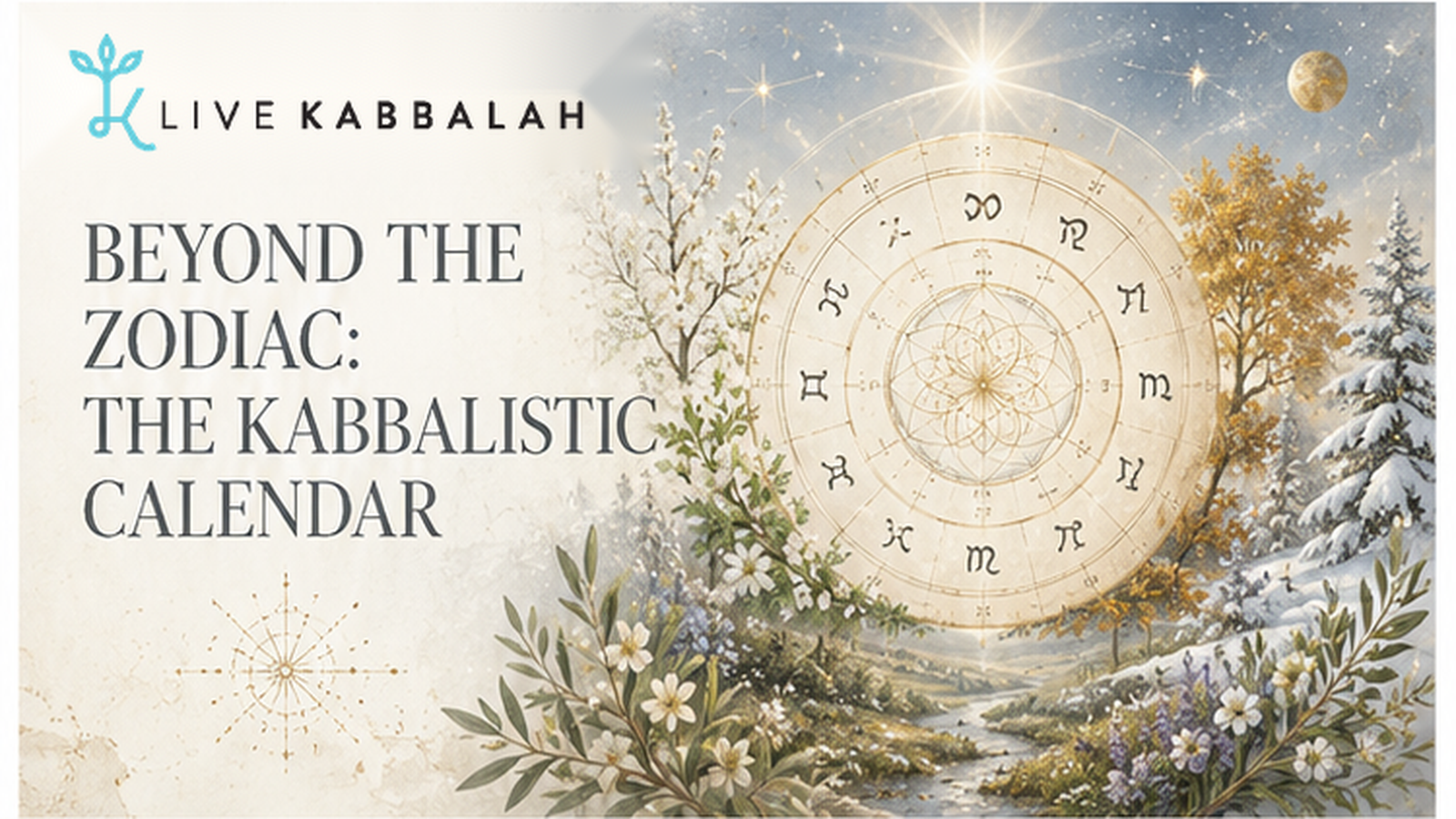
Beyond the Zodiac: The Kabbalistic Calendar

Time is not flat. Each of the twelve months carries its own energy, its own constellation, its own letter, its own opportunity. The Sefer Yetzirah laid this out three thousand years ago. This course unlocks the Kabbalistic calendar month by month, showing you the signature of each one and the work it is asking of you. Once you start living with this map, the year stops feeling like a treadmill and starts feeling like a curriculum your soul signed up for. What You Will Explore The Sefer Yetzirah Framework. The foundational text that pairs months, signs, letters, and tribes. We unpack how it all fits together. Each of the 12 Months. From Nissan through Adar, the energy of every month and the inner work that goes with it. The Signs and Their Soul Work. What the zodiac means in Kabbalistic terms, and how each sign’s lessons play out in real life. The Letters of the Months. Working with the Hebrew letters that govern each month as living energy. Living the Calendar. Practical rhythms and meditations for aligning with each month as it comes. What You Will Receive HD professionally recorded classes for an immersive learning experience. Comprehensive PDF notes, worksheets, and exercises to deepen your study. Lifetime access. Revisit the material anytime, on any device. Bonus materials and recommended reading to enrich the journey. Personal application tools and guided reflections to bring the teaching into daily life. Words From Our Students “I have lived through forty-some years of the Jewish calendar without ever understanding it like this. Now every Rosh Chodesh feels like a fresh invitation.”— Miriam Lazar, Therapist, Boulder Colorado “The class on Cheshvan changed how I think about the post holiday letdown. There is a whole spiritual purpose to that month and I never knew.”— Ari Shapiro, Filmmaker, New York “This is the kind of course you take once and reference for the rest of your life.”— Yael Ohana, Astrologer, Lisbon Begin the Journey Time is one of G-d’s most generous gifts. This course teaches you how to actually open it. Enroll today for $229 USD.

$229.00 USD
View All Courses