The Letter Peh: The Face We Turn Toward the New Year
Sep 07, 2026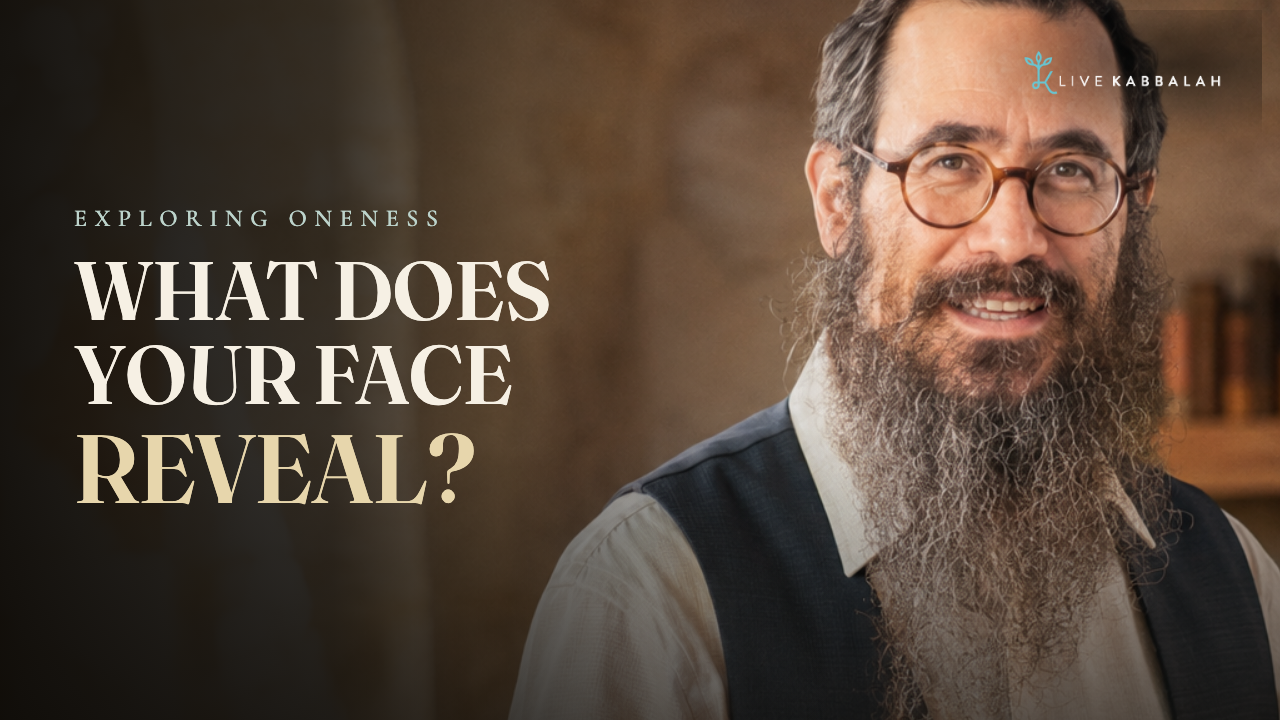
The Hebrew letter Peh means mouth.
It is the letter of speech and expression, but it also opens a deeper teaching about the face. In Hebrew, panim means face, while pnimiyut means our inner life. The two words are intimately connected.
The face is not merely the surface of a person. It is the threshold where the inner world meets the outer world. Our eyes reveal. Our expression reveals. Our mouth reveals. Even our confidence, fear, tenderness, and resistance pass quietly through the face.
This is why Peh belongs so naturally to Elul and Rosh Hashanah.
The strength of eighty
Peh has the numerical value of eighty. Pirkei Avot teaches that eighty is the age of strength.
This is not necessarily physical force. It is mature strength, the capacity to govern our inner expression and to speak from a deeper place.
Moshe steps into leadership at eighty. His objection at the burning bush is precisely about his mouth: he does not see himself as a speaker. Yet G-d tells him that the gift of speech does not begin with personal confidence. The deepest voice is not always, “What do I want to say?” Sometimes it is, “What wants to be spoken through me?”
True expression begins when the mouth becomes a vessel.
Speech creates a world
Creation begins through speech: “And G-d said, Let there be light.” Human speech does not carry the unlimited power of Divine speech, but it reflects that pattern. Words create atmospheres, expectations, relationships, and possible futures.
A sentence can return courage to someone who has forgotten it. A careless word can remain in the heart long after the speaker has moved on. The way we speak about ourselves becomes the emotional world in which we live. The way we speak about another person can either preserve their dignity or reduce them to a single moment.
This makes the work of Peh practical. Before Rosh Hashanah, we listen for the language from which we are building our lives. What do I repeatedly tell myself about who I am? What future do my words assume is possible? Do my words make room for growth, or keep everyone imprisoned in an old story?
Gevurah in speech is not harshness. It is stewardship. A sacred mouth does not say everything it feels, nor does it remain silent when truth and love require a voice. It learns to distinguish reaction from responsibility.
The King meets us with a smiling face
The Alter Rebbe describes Elul with the image of the King in the field. Before the awe of Rosh Hashanah, there is nearness. The King receives every person with a beautiful and smiling face.
When someone smiles at us, something within us wants to respond. A face can burden the space around it, or it can breathe life into another person. A sincere greeting may appear small, yet it tells another soul: I see you. I am glad you are here.
Elul asks us to notice the face with which we meet the world.
This does not mean covering pain with a false smile. It means allowing our relationship with G-d to reach the face. Gratitude, prayer, and honest inner work help joy grow from within. Sometimes the movement also begins from the outside. We smile, speak kindly, and act as the person we know we are becoming, and the outer gesture helps awaken the inner reality.
Teshuvah closes the distance
Teshuvah is often translated as repentance, but its essential meaning is return.
It does not ask us to become someone else because we are not good enough. It asks us to return to our pnimiyut, the truest self within us, and to bring that truth into our panim, the face we turn toward life.
Teshuvah closes the distance between what is within and what is shown.
Sometimes we need boundaries and guardrails. Tanya calls this iskafya, the work of restraint. The deeper transformation is ishapcha, when the energy itself is changed and the inner and outer self begin to move together.
Sin, in its deepest sense, is missing the mark. We turn our face away from G-d, away from our calling, or away from our own soul. Return begins when we face the King again.
The distance between pnimiyut and panim can appear in many forms. We value tenderness but speak defensively. We long to serve but keep postponing the work. We believe that every soul carries Divine dignity, yet judge ourselves or someone else through a narrow frame. We know that G-d is near, but live as if everything depends upon our control.
Return begins when we stop turning away. We face what is true without using truth as a weapon against ourselves. We let remorse become movement. The goal is not shame; the goal is reunion.
The shofar reaches beneath the hiding
The Torah describes a double concealment, hester astir: not only is the Divine face hidden, but the hiding itself becomes hidden. When we know something is concealed, we know to search. The darker state is forgetting that there is anything to seek.
The shofar reaches beneath that forgetfulness.
Its cry has no words, yet it awakens a recognition deeper than words: G-d is here. G-d has always been here. I have never truly been separate.
The shofar is not only a sound heard on Rosh Hashanah. It is also the awakening hidden within the events of our lives. It calls us out of distraction and asks us to seek the face again.
Life itself can become a shofar. A loss, a birth, a moment of beauty, an honest conversation, or an unexpected encounter can pierce the walls of habit and return us to what matters. The question is whether we are willing to hear the call.
The face as blessing
The priestly blessing culminates in the language of the face: “May G-d shine His face upon you,” and “May G-d lift His face toward you and grant you peace.”
To receive the shining face of G-d is to experience ourselves as seen by a love deeper than our achievements and failures. That gaze does not erase responsibility. It gives us the safety from which honest change becomes possible.
When we receive that light, we become capable of reflecting it. Our face can become a place where another person encounters patience. Our mouth can become a vessel for courage, blessing, and truthful compassion. Peace enters when the inner face and outer face are no longer at war.
A practice for the new year
Before Rosh Hashanah, sit quietly with these questions:
- Where have I turned my face away from G-d, from myself, or from a calling?
- What inner truth is ready to move from pnimiyut into my face?
- What speech needs to be spoken, softened, or held in silence?
- What new voice do I want to bring into the coming year?
The blessing of the Kohanim asks that G-d’s face shine upon us and be lifted toward us. We receive that light, and then we become capable of reflecting it toward others.
Choose one small expression of return. It may be a blessing spoken aloud, an apology, a boundary, a conversation, a prayer, or a silence that protects what is sacred. Let the movement be concrete enough to enter the world.
Continue the teaching
Circle members can continue with the complete EOM #113 class inside The Light Warrior Circle:
Watch EOM #113: The Letter Peh — Face, Speech, and Return
The companion practice is available inside Kavana Academy:
Listen to The Letter Peh Meditation: Meeting Your Inner Face
Watch the teaching
The Letter Peh: Your Inner Voice and the Shofar
Listen to the audio teaching
The Letter Peh: Face, Speech, and Return
May the coming year bring a truer voice, a radiant face, and the courage to return to who we have always been.
With blessings,
Rabbi Amichai