The Letter Resh: When Emptiness Becomes a Beginning
Oct 19, 2026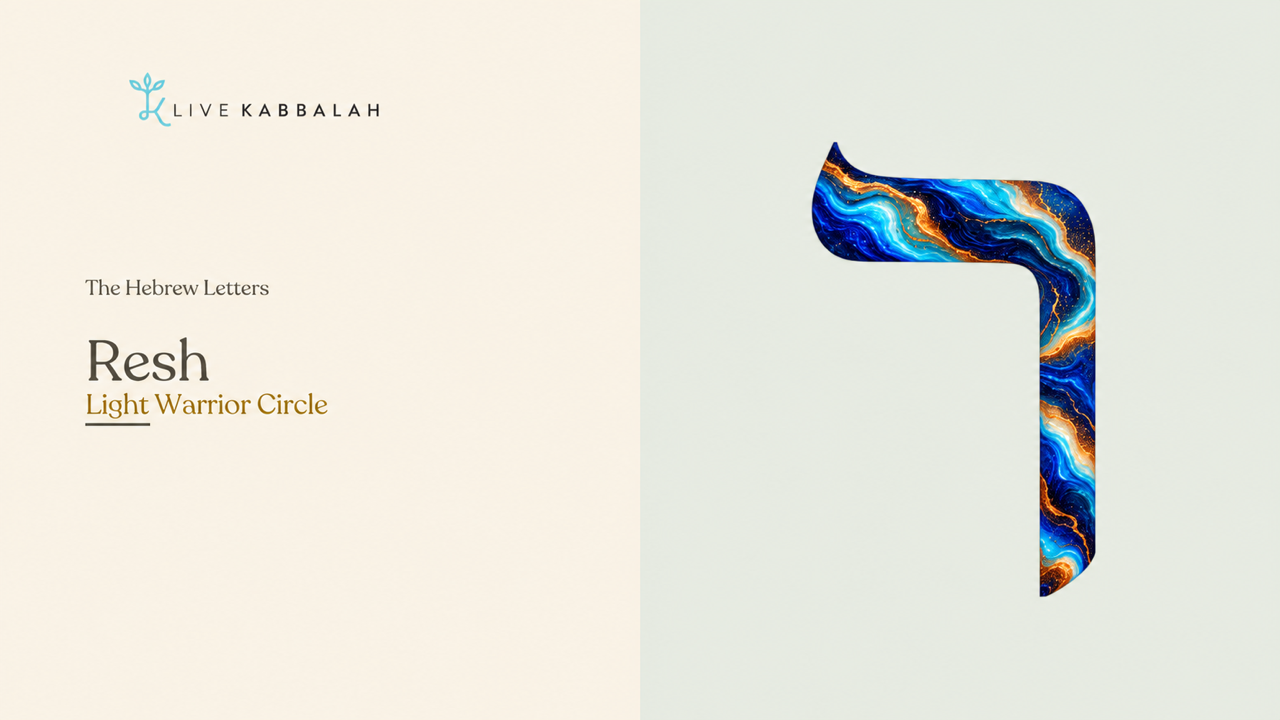
There are moments when we become acutely aware of what we do not have. We may feel that we lack understanding, confidence, resources, connection, or the spiritual strength we think we should possess by now.
The Hebrew letter Resh begins in that uncomfortable place. Its name is related to rash, a person who is poor or lacking. Yet the inner work of Resh is not to glorify lack or dismiss real material need. It is to ask what becomes possible when we can acknowledge that we do not yet have everything within ourselves.
That honest recognition can become the beginning of receiving.
From knowing to awareness
In Nedarim 41a, Abaye teaches that poverty can be a lack of de'ah, knowledge or understanding. This does not erase the reality of material poverty. It opens another dimension of the question: What happens when a truth remains in the mind but does not yet guide the way we live?
I may know that every person carries dignity, yet forget it when I feel hurt. I may believe that listening matters, yet prepare my answer while another person is still speaking. I may understand that G-d is present, yet live a difficult moment as though I am completely alone.
Resh asks us to notice the space between what we know and what we live. Awareness begins when a teaching enters the moment in which we actually need it.
The small point that changes the letter
Resh and Dalet look almost identical. Dalet carries a small projecting point, while Resh does not. Basi LeGani 5710 reads that point as a Yud, a sign of bittul, humility and self-nullification.
Humility here does not mean erasing oneself. It means making room to receive something beyond the limits of one's present view. A student needs this quality in order to hear a teacher. We need it in a relationship when we allow another person's experience to matter. We need it in spiritual life when we admit that what we have received did not begin with us.
The difference between Resh and Dalet is visually small, but spiritually profound. The question is whether a sense of lack closes the self in defensiveness or opens the self to relationship.
From otherness to oneness
The words acher, other, and echad, one, bring this distinction into sharper focus. In the Shema, echad ends with Dalet: “Hashem is our G-d; Hashem is one.” In Exodus, acher ends with Resh in the warning against worshipping another god.
Basi LeGani considers what happens when these two letters exchange places. A small change transforms oneness into otherness.
This teaching is theological, yet it also gives us language for an ordinary spiritual experience. We can feel far from G-d and quickly conclude that we no longer belong. We can feel distance in a relationship and treat that feeling as proof that connection is no longer possible.
Resh asks us to pause before making distance into an identity. A feeling of otherness can become an invitation to take one small step toward connection.
Why Resh equals 200
Resh has the numerical value of 200. Two classical sources give that number a striking human meaning.
Mishnah Peah 8:8 uses two hundred zuz as a threshold in determining whether a person may receive certain gifts intended for the poor. Someone with two hundred may not receive them, while someone with two hundred less one dinar may. The Mishnah is discussing a specific legal category, with further qualifications, but it places 200 at the boundary between having enough and being considered in need.
Kohelet Rabbah describes a different kind of threshold. A person who has one hundred wants two hundred. A person who has two hundred wants four hundred. Desire moves the line. The amount that once seemed sufficient becomes the starting point for wanting more.
Read together, the sources invite a difficult question: What is the difference between having enough and feeling enough?
Each of us has a personal “two hundred,” a condition we imagine must be met before we can feel secure, grateful, ready, or complete. This does not mean denying genuine needs or abandoning healthy aspiration. It means becoming aware of the promise we have quietly attached to the next amount, achievement, recognition, or certainty.
If the goalpost continually moves, arrival never comes.
The crown turned toward Resh
Last week's study of Kuf gives us one more way to understand Resh. Shabbat 104a reads Kuf as Kadosh, holy, and Resh as rasha, wicked. The face of Kuf turns away from Resh, expressing that wrongdoing matters and must be confronted.
Yet the crown of Kuf turns toward Resh. The passage teaches that if the person returns, G-d will bind a crown upon them. The opening in Kuf remains available for return.
The two movements belong together. Spiritual life asks for responsibility, and it preserves the dignity of teshuvah. We can name what happened, repair what we can, and begin practicing a different response. Our next choice still matters.
A practice for the week
Notice one place where you feel empty, behind, defensive, or far away.
Instead of judging that place, ask:
- What might this space be ready to receive?
- Is there something I need to learn, hear, or acknowledge?
- What is one act of gratitude, connection, humility, or repair that is within reach?
- When will I take that step?
The place of lack does not have to be the end of the story. With awareness and humility, it can become the doorway through which a new beginning enters.
Rabbi Amichai Cohen
From our Light Warrior Class 10/19/2026