Astrology & Reincarnation: Gilgul, Galgal, and the Mystery of Timing
Jan 05, 2026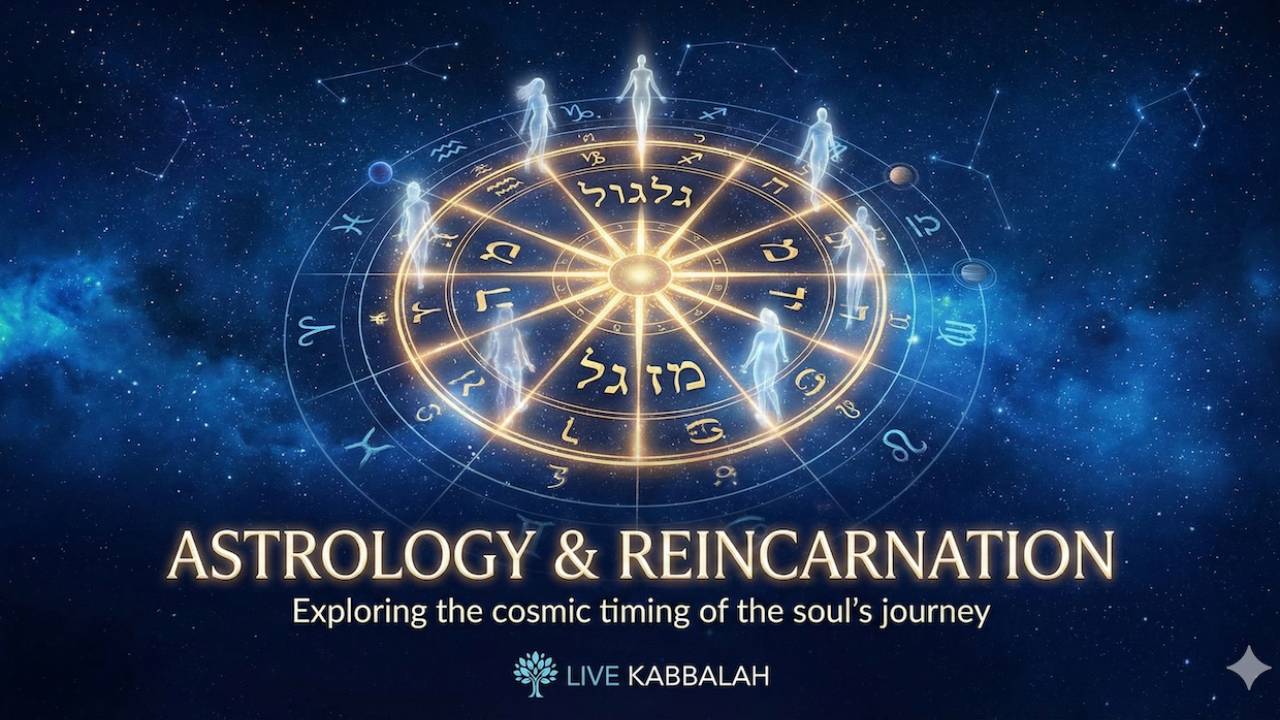
B"H
By Rabbi Amichai Cohen
I find astrology fascinating. It is also one of the most misunderstood subjects in the spiritual world. Many people assume it has nothing to do with Judaism, or that it belongs to “outside” systems and is therefore off-limits. But our tradition speaks clearly: we are affected by the stars. The question is not whether the cosmos influences us. The deeper question is how we understand that influence within the oneness of Hashem.
The cosmos as humanity’s first “science.”
Long before Judaism emerged as a nation, human beings were already studying the heavens. Civilizations observed seasons, tracked cycles, and mapped patterns in the sky. In the era of Avraham Avinu, one of the prominent spiritual systems was Zoroastrianism, which placed great emphasis on the cosmos and its movements. Even the names of several Jewish months, such as Tammuz and Elul, are not Hebrew in origin. They entered Jewish usage through the Babylonian exile and reflect older Near Eastern and Persian linguistic roots.
This does not threaten Judaism. It highlights something deeper: the human being has always looked upward, sensing that time is not random and that the universe carries meaning.
Constellations are human patterns—but the flow is real
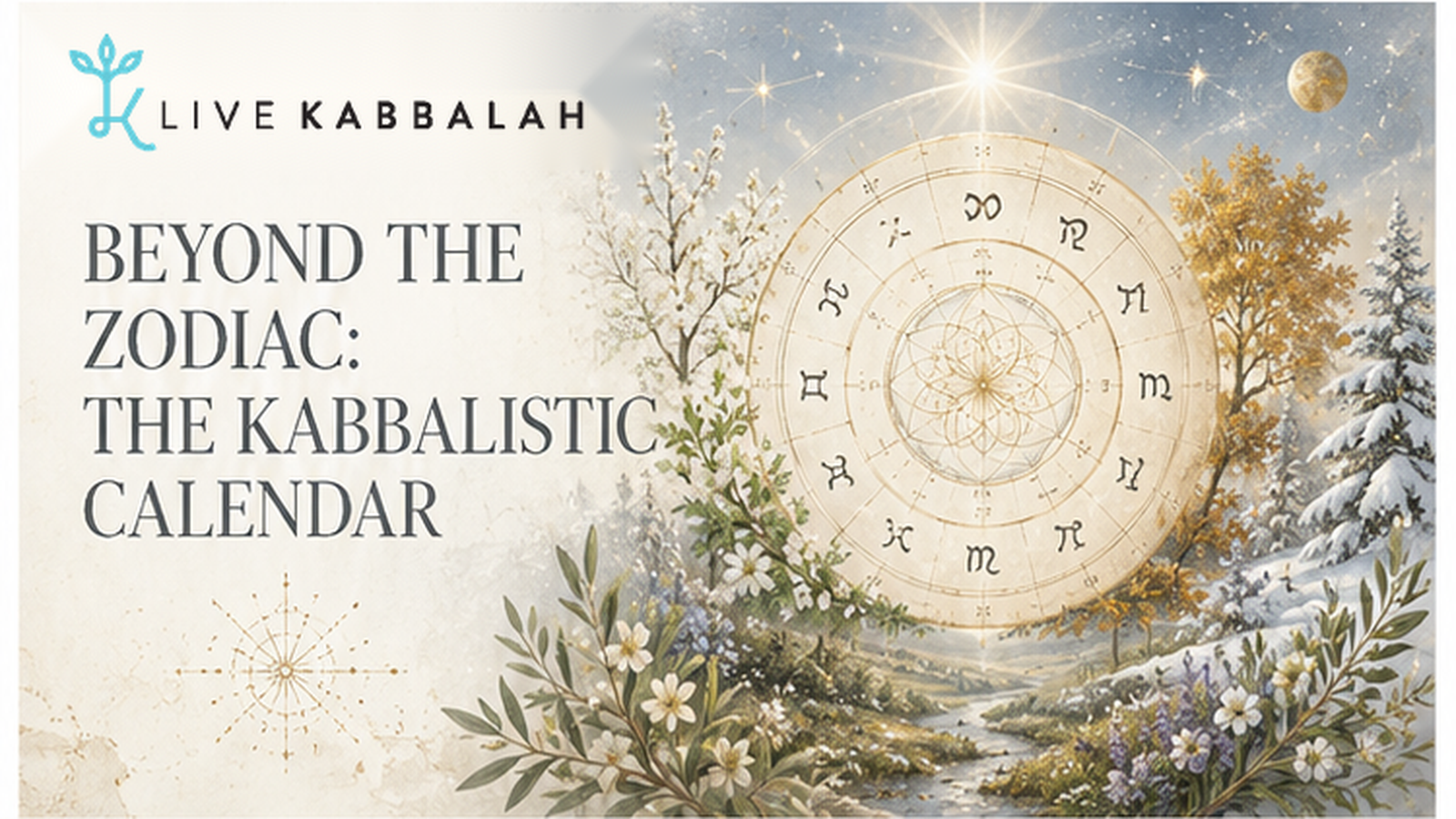
The constellations as we describe them are, in a sense, human “discernments.” We grouped stars into patterns and gave them names. Yet the spiritual flow associated with time is very real. Each month has a distinct energy, a spiritual “flavor,” a particular channel of divine influence that descends into the world.
In Hebrew we call this mazal. The word is connected to the concept of nozel—a “drip” or “flow.” Each month has its own drip-line of divine energy.
But then comes the crucial question:
Where does mazal come from?
Judaism does not say that the stars are independent forces. That idea is precisely where idolatry begins.
Historically, this was the great mistake of early humanity. The generation of Enosh began saying: “Let us pray to the sun, the moon, the planets, the forces.” The Greeks built temples and statues for planetary deities. They were often brilliant observers—but they mistook the channel for the Source.
Kabbalah teaches that Hashem works through nature (teva), but nature is never autonomous. The stars are not “gods.” They are part of a vast mechanism of divine flow.
The Kabbalistic ladder of influence
According to our mystical tradition, what we call “astrological energy” is not the beginning of the story. It is the final stage of a much higher descent.
In simple terms, there is a chain:
-
Asiyah: the most physical realm, where we experience the months, the seasons, and the constellations in a tangible way.
-
Yetzirah: the angelic realm. Each month has corresponding angelic channels (not independent beings, but emissaries—shluchim).
-
Beriah: the realm associated with the archetypes of the twelve tribes, because souls are higher than angels.
-
Atzilut: the realm of divine oneness, where each month corresponds to a permutation of the Divine Name, revealing its unique spiritual signature.
So mazal is real—but it is the lowest visible expression of a far higher flow.
The Zohar: astrology and reincarnation meet
The Zohar has countless references to astrology and to reincarnations (gilgulim). What is especially striking is when the Zohar brings them together in one teaching, revealing that the soul’s descent into a lifetime is woven into cosmic timing.
One of the powerful ideas we explored is that the twelve constellations correspond to “twelve channels” of time—patterns not only in the months but even within the day itself. Time is not flat. It has structure.
Then comes an even deeper secret:
“Israel has no mazal” — what does that mean?
Chazal say: “Ein mazal l’Yisrael.” Many misunderstand this. It does not mean the Jewish people have no astrological influence. It means we are not bound by it.
The Zohar describes an inner point—represented by the Yud within the Aleph—a root-level connection that precedes the visible constellations. When a person connects to that inner point through faith, teshuvah, prayer, and inner transformation, they can rise above the default pattern.
In other words: there is a “drip” that descends. But there is also a place in the soul that can reconnect to the Source of the drip.
Gilgul and galgal: the “wheel” of return
The Zohar plays with language in a way that opens a new doorway. Galgal means a wheel. It also hints to the cycles of the heavens. And gilgul—reincarnation—comes from the same root.
The implication is profound: reincarnation is not random. The soul returns through a structure of cycles and timing. It descends into a particular month, a particular spiritual climate, with specific strengths and challenges that match what it came to refine.
In one lifetime, a soul may be born under one “season of consciousness.” In another, under a completely different one. This is not punishment. It is spiritual training—soul exercise—designed to expand the soul beyond what comes naturally.
Wounding, compassion, and the bigger picture
When we look honestly at life, we see that much of our pain comes through people: parents, teachers, siblings, authority figures, relationships. It raises questions that can feel unbearable: Why this family? Why this story? Why this wound?
The teaching of gilgul does not erase the pain, but it can give it context. It can soften resentment. It can help a person release the illusion that “I am cursed” or “I am not good enough.” It invites a different lens:
-
This is not random.
-
This is exact.
-
This is my soul’s curriculum.
And if we hold that gently, it can open the possibility of forgiveness—not necessarily approval of what happened, but release of the chains it created inside us.
Merit and mazal: a humbling teaching
One of the most sobering teachings quoted in this class is the statement that children, health, and livelihood are not solely dependent on merit, but also on mazal—meaning the timing and configuration through which the soul entered this world.
This does not make life fatalistic. It makes it more compassionate. We stop using spirituality as a weapon against ourselves: “If I was better, everything would be perfect.” We realize life is more complex. And still, within that complexity, we are never powerless.
Can we change our mazal?
Yes. We can shift our mazal by shifting our inner frequency—by moving from ego-driven contraction into a higher alignment with our source.
That is the deeper meaning of inner work: not escaping the pattern, but transforming the consciousness that meets the pattern. When the inner self changes, the drip-line changes. A new flow becomes possible.
Final reflection
This teaching is deep, and we only scratched the surface. But even that scratch reveals something stunning: astrology in Kabbalah is not “fortune telling.” It is a way of understanding the architecture of time, the descent of the soul, and the possibility of rising beyond what appears predetermined.
And perhaps the most empowering message is this: the chart is not your prison. It is your map.
This blog is based on a Live Kabbalah class taught inside our Light Warrior Program. If you want to learn in this style—deep text, practical inner work, and soul-level transformation—you can learn more here: https://www.livekabbalah.com/Becoming-a-light-warrior