Why the Torah Was Given to Humans, Not Angels | The Power of Free Choice & Transformation
May 21, 2026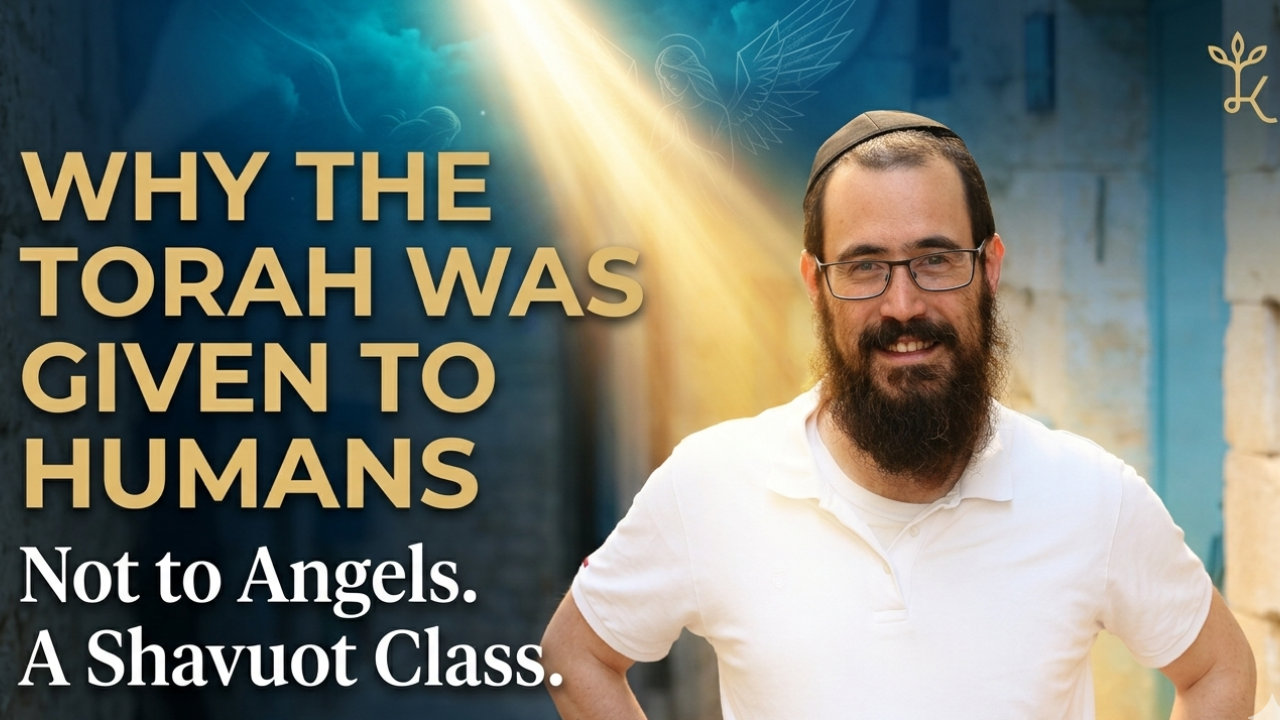
Tonight we celebrate Shavuot, which is probably one of the least understood of the Jewish holidays.
Shavuot is one of the three pilgrimage festivals, when the Jewish people would go up to the Temple in Jerusalem to celebrate. The word Shavuot comes from the word shavua, which means “week,” and it refers to the seven weeks of counting from Pesach until Shavuot — seven weeks of transformation, seven weeks of yearning, as the Israelites came out of Egypt and prepared themselves to receive the Torah.
The Talmud tells us that there was a discussion in Heaven about whether the Torah should actually be given to human beings.
The angels came before the Master of the Universe and said: “Why are You giving the Torah, Your most precious treasure, to mortals? Give it to us.”
Moshe was there, ready to receive the Torah, and the angels tried to push him aside. They said, “Do not give the Torah to them. Do not give it to human beings. Give it to us.”
Then G-d said to Moshe, “Answer them.”
Moshe said, “I am afraid. They are angels. They are fiery, powerful, spiritual beings. They could burn me up in a second.”
And G-d said, “Hold on to My throne of glory.”
Of course, this is an allegorical teaching, and it contains many layers. But Moshe then turns to the angels and says:
“Tell me, do you have parents? The Torah says, ‘Honor your father and your mother.’ Do you have a father and mother to honor?
The Torah says, ‘I am Hashem your G-d who took you out of Egypt.’ Were you ever in Egypt?
The Torah says, ‘Keep Shabbat.’ Do you need to stop and rest? Are you not already in a state of spiritual bliss?
The Torah says, ‘Do not murder. Do not steal.’ Do you have that kind of struggle?”
And the angels had no answer.
So what is really happening in this story?
The Maharal of Prague, the Maharsha, and other great commentaries explain that the question was not simply whether the Torah is holy. Everyone agreed that the Torah is infinitely holy. The real question was whether the Torah is meant to come down into this physical world.
There is a dimension of Torah that is above the world entirely. The Zohar teaches that G-d looked into the Torah and created the world. Torah is the blueprint of creation. It exists in the highest spiritual realms, beyond even the angels.
The angels were arguing that the Torah should remain in that pristine spiritual state. They were saying: “Why bring something so holy into a world of bodies, ego, desire, confusion, and struggle?”
And Moshe’s answer was: precisely because of that.
The Torah was not given to angels because angels do not live in polarity. They do not struggle in the same way. They do not have a yetzer hara, an ego, a body, parents, relationships, business dealings, emotional reactions, wounds, choices, and temptations.
Angels are powerful, luminous beings, but they are fixed in their nature.
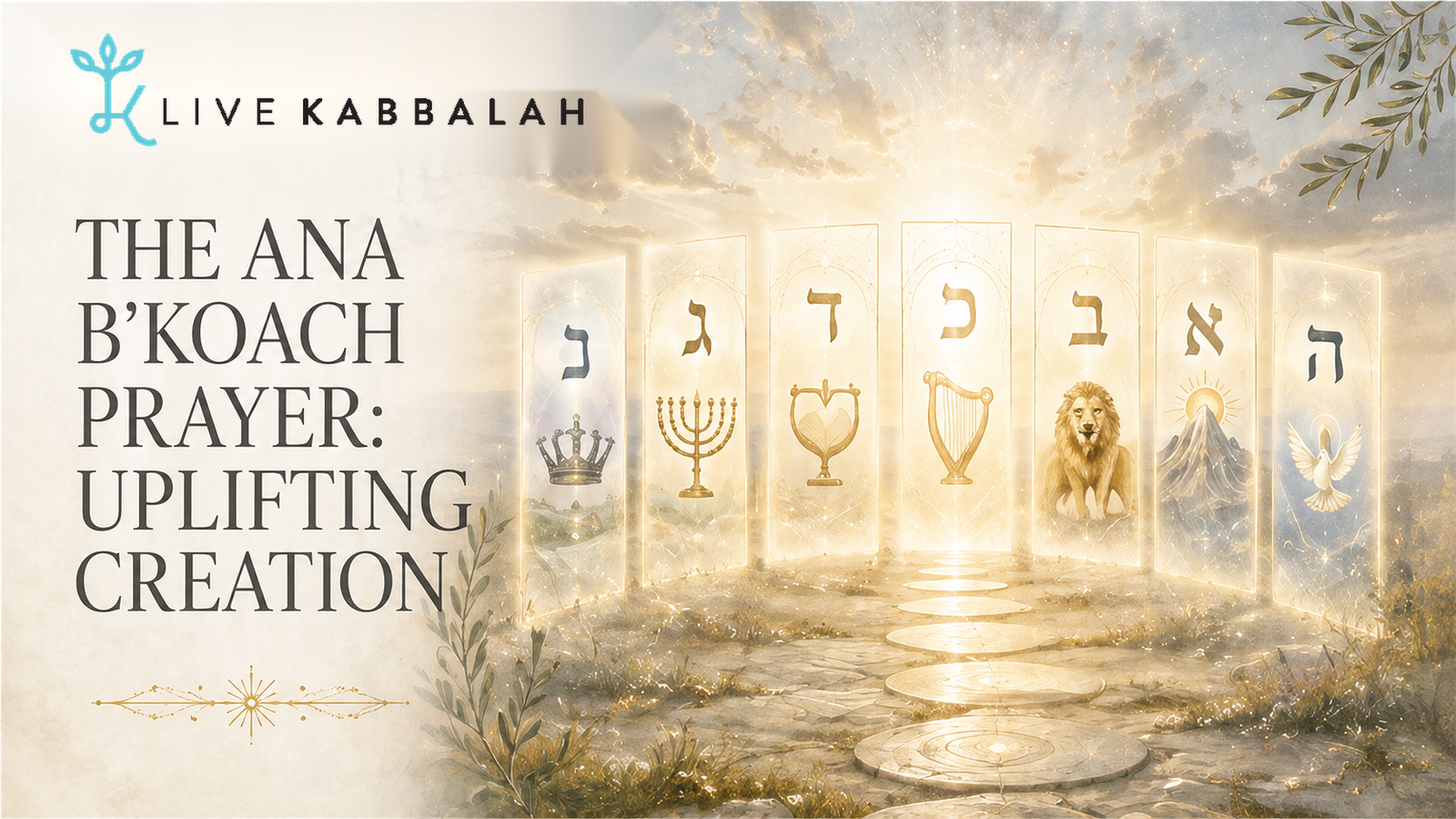
Kabbalah teaches that there are many levels of angels, but there are four primary angelic forces connected to the Divine chariot: Michael on the right side, associated with Chesed, kindness; Gavriel on the left side, associated with Gevurah, strength and awe; Uriel connected with compassion and illumination; and Refael connected with healing and Malchut.
Each angel is rooted in a specific spiritual quality. Michael is kindness. Gavriel is strength. Refael is healing. They are holy, but they are also defined by what they are.
A human being is different.
A human being has free choice.
We can be pulled toward kindness, but we may need to learn boundaries. We can be pulled toward strictness, but we may need to learn softness. We can be pulled by ego, fear, desire, pain, or reaction — and still choose higher.
That is the greatness of the human being.
Our polarities are not a curse. They are not proof that we are less spiritual. They are the very place where our deepest spiritual greatness can be revealed.
Because when we choose the mindful choice, the Divine choice, the higher-self choice — especially in the middle of struggle — we reveal something even greater than the angels.
This is what Moshe was saying to the angels:
“Do you have Egypt? Do you have parents? Do you have the six days of work and the need for Shabbat? Do you have temptation? Do you have the possibility of falling and then rising?”
The angels could not answer, because the Torah was not meant to remain only in Heaven. G-d desired the Torah to come down here — into our homes, our relationships, our parenting, our business, our emotions, our bodies, our daily choices.
G-d wants to be known down here.
This is the whole purpose of creation: that the Divine should be revealed within the physical world.
And that is why Shavuot, although it is an incredibly spiritual holiday, is also very physical. The Torah tells us that the celebration should be lachem — “for you.” We are meant to eat, drink, rejoice, celebrate, and enjoy the physical world, not for physicality itself, but because physicality can become a vessel for G-dliness.
On Pesach, we do not eat chametz. Chametz represents ego, inflation, the will to receive only for ourselves. But after seven weeks of inner refinement, we arrive at Shavuot, and in the Temple we brought the offering of the two loaves of bread.
Now the bread itself becomes holy.
Now the ego is not destroyed, but transformed. We are not meant to erase our humanity. We are meant to elevate it.
We are meant to receive abundance, blessing, love, and greatness — not from a reactive place, not from ego-driven desire, but from a transformed place: receiving in order to give, receiving in order to become our true Divine selves.
This is also why the Torah hints to Shavuot from the very beginning of creation. The Torah says, “the sixth day,” and the commentaries explain that this refers to the sixth day of Sivan, the day we received the Torah. Without the giving of the Torah, creation itself would not have its purpose.
On Shavuot, G-d places the ball in our court.
Of course, G-d creates everything and recreates the world every single moment. But He gives us the ability to choose, to transform, and to bring G-dliness into this physical world.
The prophet says, “I will give you walkers among those who stand.” The angels are called “those who stand,” because they remain in their spiritual place. But souls are called “walkers.” We move. We grow. We fall and rise. We transform.
That is the journey of the seven weeks of the Omer: seven times seven, until we reach the fiftieth gate. At that point, we bring a new offering to Hashem.
We become something new.
We take the physicality of the world, the physicality of our bodies, the reality of our emotions, our desires, our ego, our relationships, our challenges — and we bring it all into the service of Divine oneness.
This is the gift of Shavuot.
The Torah is not only a heavenly wisdom. It is a living path of transformation. It comes down into this world so that we can reveal that even here, even in the body, even in the struggle, even in our human complexity, there is G-dliness.
May each of us receive the Torah anew this Shavuot.
May we experience deep inner transformation, and through our inner transformation, may we help bring transformation to the world around us.
May we see the oneness of the Creator revealed in the fullest sense, very soon.
Wishing you a beautiful and joyful Shavuot, with much love.